


In early 2025, the Departments of Labor, Health and Human Services, and the Treasury (collectively the “Departments”) released their third annual MHPAEA Report to Congress, fulfilling the disclosure mandate under the Consolidated Appropriations Act, 2021 (CAA). The report highlights ongoing enforcement efforts and persistent compliance concerns, particularly around plan design and the application of non-quantitative treatment limitations (NQTLs). These issues mirror those raised in prior reports (see: Ongoing Mental Health Parity Compliance Concerns Identified in the 2023 Report to Congress) and are explained further below.
Compliance Snapshot
- Widespread Noncompliance Persists. The Departments continue to identify systemic issues with how plans apply NQTLs, including inadequate comparative analyses and impermissible exclusions of key mental health and substance use disorder (MH/SUD) treatments.
- Enforcement Activity Intensifies. The Employee Benefit Security Administration (EBSA) and Centers for Medicare and Medicaid Services (CMS) issued over 120 enforcement letters during the reporting period, including 32 initial determinations and 3 final noncompliance findings—primarily targeting network adequacy and prior authorization practices.
- Comparative Analyses Common Deficiencies. Plans frequently failed to prepare analyses, omitted benefit classifications, and relied on vague or unsupported assertions, ultimately hindering their ability to demonstrate MHPAEA compliance.
Background
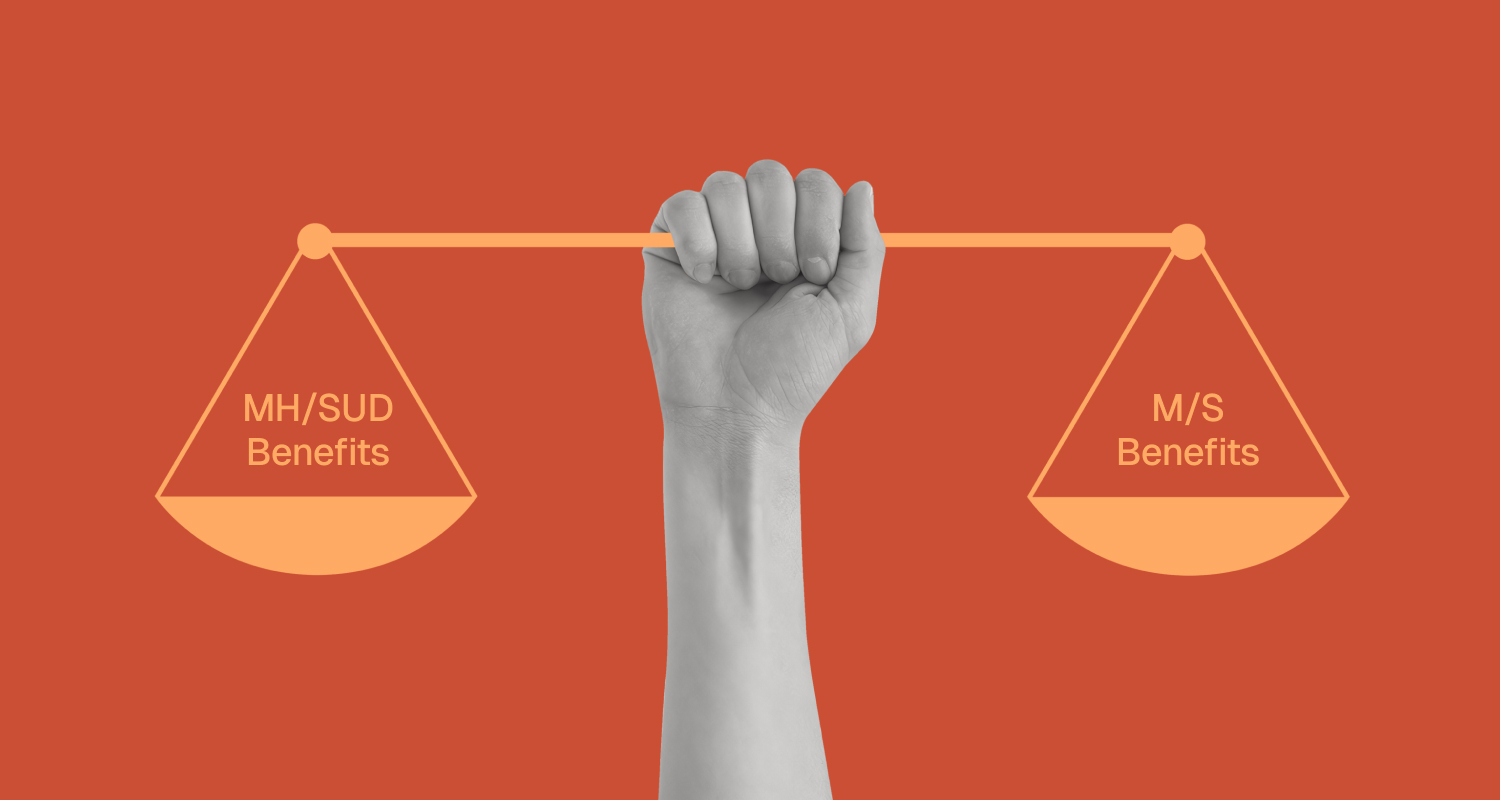
MHPAEA requires group health plans and insurers that offer mental health or substance use disorder (MH/SUD) benefits to do so no less favorably than medical/surgical (M/S) benefits. This includes financial requirements (e.g., copays), treatment limitations (e.g., frequency of treatment, number of visits, days of coverage), and NQTLs such as prior authorization requirements, step therapy/fail-first policies, and limitations based on medical necessity (note this is not an exhaustive list).
Since February 2021, the CAA has required plans that impose NQTLs on MH/SUD benefits to conduct and document a comparative analysis showing compliance with MHPAEA. The Department of Labor (DOL) must report annually to Congress on these analyses and overall MHPAEA enforcement. Per the report, EBSA’s efforts under the CAA have cumulatively resulted in corrections that have benefited directly more than 7.6 million participants in more than 72,000 plans.
For more information on the comparative analysis requirement, see our article Guidance Released on the New Mental Health Parity Comparative Analysis Requirements.
2024 Report to Congress: Highlights
The report summarizes recent MHPAEA enforcement efforts and in doing so, provides awareness of overall MHPAEA ongoing compliance issues. The 2024 report looks at the reporting period ending July 31, 2023, wherein the EBSA and Centers for Medicare and Medicaid Services (CMS) issued:
- 39 initial letters requesting comparative analyses;
- 55 insufficiency letters covering over 40 NQTLs; and
- 32 initial determination letters finding that plans and issuers had violated MHPAEA’s requirements; and
- 3 final determinations of noncompliance finding an issuer violated MHPAEA’s requirements for 3 NQTLs, including network participation and prior authorization (all final determinations issued by CMS to only health insurance issuer).
The report discusses common NQTL deficiencies (similar to those identified in the 2022 and 2023 reports) and their related enforcement action. Highlights from the report include:
- Enforcement Priorities. The report reiterates enforcement priorities mentioned in the 2023 report:
- Prior authorization requirements for in- and out-of-network inpatient services;
- Concurrent care review for in- and out-of-network inpatient and outpatient services;
- Out-of-network reimbursement rates (methods for determining usual, customary, and reasonable charges);
- Standards for provider admission to participate in a network, including reimbursement rates;
- Impermissible exclusions of key treatments for MH/SUD; and
- Adequacy standards for MH/SUD provider networks (e.g., time/distance standards, provider-to-member ratios).
Network adequacy and composition continues to be a prominent focus for the Departments, especially given that such NQTL can significantly impact access to MH/SUD benefits. EBSA anticipates continuing to investigate network adequacy and composition in future reporting periods.
Of interest, when targeting impermissible exclusions of key treatments for MH/SUD benefits, EBSA engages directly with third-party administrators (TPAs) and carriers before reaching out to the plans they serve. Once a potentially noncompliant exclusion is identified, the service provider is required to flag all affected plan clients. EBSA then reviews the relevant comparative analyses and works collaboratively with both the provider and the plans to remove or correct the exclusion.
- Comparative Analyses. Common deficiencies continued to be observed include:
- No Comparative Analysis Prepared. Plans fail to meet the basic requirement of conducting and documenting an NQTL analysis.
- Superficial or Vague Comparisons. Submissions often lack meaningful evaluation of how MH/SUD and M/S benefits are treated.
- Unexplained Documentation. Supporting materials are submitted without context, rationale, or clear linkage to compliance.
- Missing Benefit Classifications. Analyses omit which specific MH/SUD and M/S benefits or classifications are affected by the NQTL.
- Overemphasis on Similarities. Plans highlight where MH/SUD and M/S benefits align, but ignore or gloss over critical differences.
- Unsupported Conclusions. Statements of compliance are made without data, evidence, or a clear analytical framework.
As explained further in the report (with examples of NQTL deficiencies and corrections), most initial submissions lacked sufficient detail, data, or documentation and plans often applied more lenient access standards to M/S providers than to MH/SUD providers. Commonly excluded MH/SUD treatments included applied behavior analysis (ABA) therapy for autism, medication-assisted treatment (MAT) for opioid use disorder, and nutritional counseling for eating disorders. In addition, MH/SUD providers were often reimbursed at lower rates than M/S providers without adequate explanation.
With the above in mind, employers should ensure that their comparative analyses are thorough, data-driven, and include defined factors and evidentiary standards, demonstration of comparability and stringency (both written and in operation), and relevant outcomes data (e.g., out-of-network utilization, wait times). Importantly, the report confirms that the Departments are developing a model comparative analysis designed to offer practical, detailed guidance to help plans and insurers meet MHPAEA’s documentation and compliance standards more effectively.
Employer Takeaways
The 2024 MHPAEA Report to Congress makes clear that the Departments continue to identify widespread noncompliance with the design and application of nonquantitative treatment limitations (NQTLs). While the report does not introduce new employer obligations, it does offer critical insights for maintaining compliance:
- Employers should work in conjunction with their carriers and TPAs when implementing plan designs that impose NQTLs. For example, employers should review their plan’s network adequacy, evaluating access standards, reimbursement rates, and provider availability for MH/SUD as compared to M/S benefits; and remove any categorical exclusions that apply only to MH/SUD benefits.
- Employers should work with their carrier (if fully insured) or TPA (if self-insured or level funded) to perform and provide the comparative analysis and provide it upon request to plan participants, the DOL, or state agencies. See our article for the most recent guidance impacting the comparative analysis requirement, Mental Health Parity Final Rules: Enforcement Paused.
Additional Resources
- 2024 MHPAEA Report to Congress
- The Department of Labor MHPAEA Self-Compliance Tool
- Sequoia Forewords:
Connect with a Sequoia consultant to learn how Sequoia’s compliance services are integrated in our benefits services and tailored solutions. And if you’re already a Sequoia client, stay on top of your employer obligations with your Compliance Checklist that highlights important compliance dates, action items, and resources.
The information and materials on this blog are provided for informational purposes only and are not intended to constitute legal or tax advice. Information provided in this blog may not reflect the most current legal developments and may vary by jurisdiction. The content on this blog is for general informational purposes only and does not apply to any particular facts or circumstances. The use of this blog does not in any way establish an attorney-client relationship, nor should any such relationship be implied, and the contents do not constitute legal or tax advice. If you require legal or tax advice, please consult with a licensed attorney or tax professional in your jurisdiction. The contributing authors expressly disclaim all liability to any persons or entities with respect to any action or inaction based on the contents of this blog. © 2025 Sequoia Consulting Group. All Rights Reserved.