


With layoff rates staying higher than anyone would like these last few years, one of the things I’m often asked about is how companies are structuring severance. Based on how 2026 started, with January marking the worst month for US job cuts since 2009, it’s clear those conversations aren’t slowing down anytime soon.
As companies work through continued uncertainty — and with elevated layoffs keeping job security top of mind for executives — finance, HR, and executive teams are taking a closer look at their severance practices, including what’s standard, what’s changing, and how their approach compares to the broader market.
Before getting into the most common questions I hear, it’s useful to level-set what a typical severance policy includes today. That context helps explain why certain elements, like payment method or equity treatment, show up so frequently in leader conversations.
What a Typical Severance Policy Covers
While there’s no single standard, most severance policies include a familiar set of components.
Organizations usually distinguish between termination types — separating reductions in force or role eliminations from performance-based or cause‑based exits. Cash severance is often formula‑driven, tied to base salary with adjustments for tenure or level.
Benefits play a role as well. Many companies offer COBRA support or a premium stipend, continued access to EAP services, or outplacement assistance. Equity treatment is another high‑interest area for employees, especially when it comes to vesting cutoffs and post‑termination exercise windows. Bonus and commission handling, whether prorated or excluded, tends to follow the underlying incentive plan.
Legal teams also stay heavily involved. Mutual releases, confidentiality provisions, non‑disparagement language, OWBPA disclosures, and timing rules under Section 409A all influence how severance is structured and delivered. And for larger workforce changes, having clear communications, manager scripts, and templates can dramatically shape the employee experience.
With that baseline in mind, here are the areas leaders ask about most often and what the latest Sequoia data shows about how practices are adapting this year.
Are More Companies Adopting Formal Severance Policies?
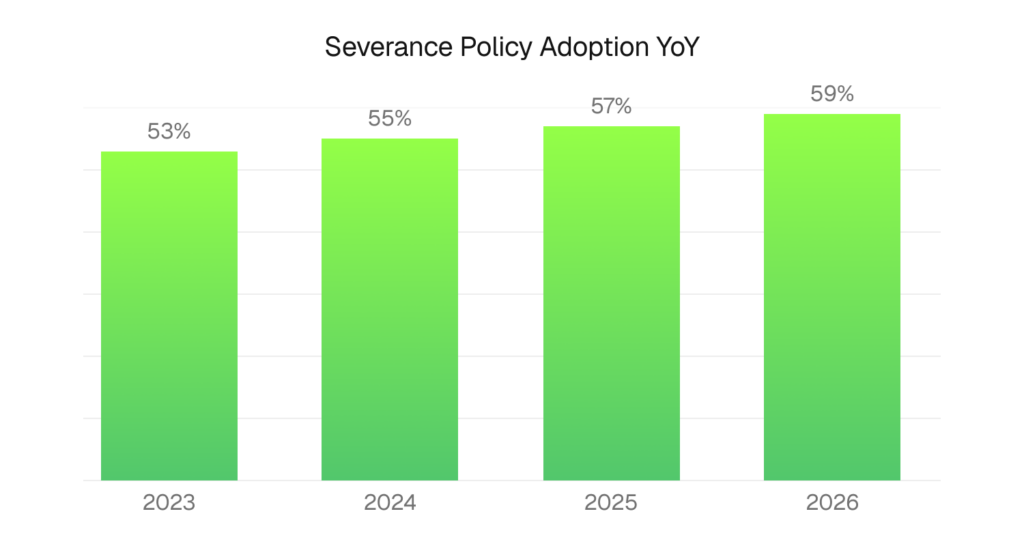
The number of companies adopting formal severance policies is growing steadily. Across all company sizes, we’ve seen severance policy adoption increase year over year, from 53% in 2023 to 59% in 2026.
More organizations are formalizing their approach for the same reasons — predictability, fair treatment, and clearer budget planning. In a period where layoffs continue to ripple across industries, having a defined framework reduces uncertainty for both leaders and employees.
It also supports talent attraction. Candidates evaluating a new role want to understand how a company handles a termination or reduction in force. A transparent, consistent severance policy can make joining a company feel less risky and signal that the organization takes care of people even during tough moments.
How Are Companies Paying Out Severance in 2026?
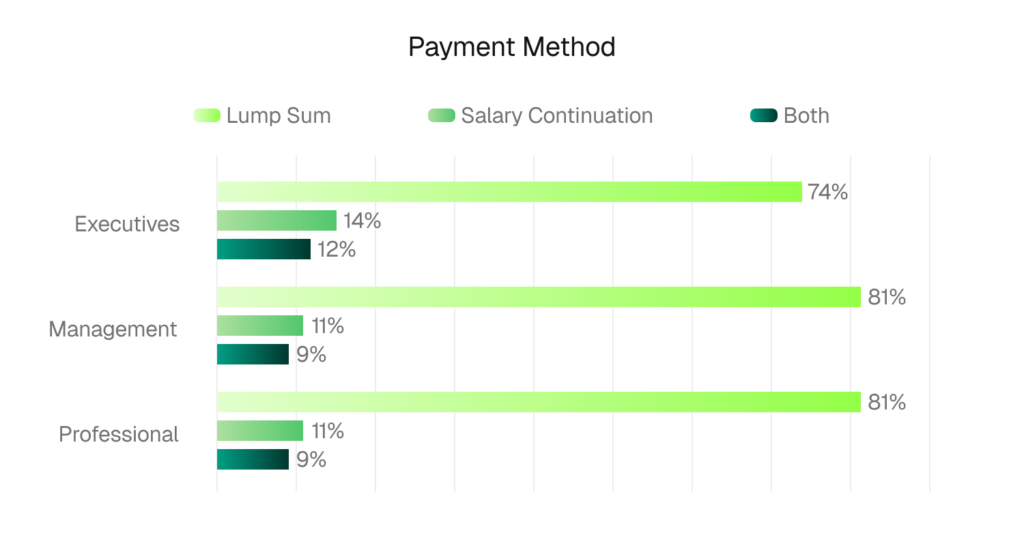
Lump sum continues to be the prevailing method across roles.
For managers and professional employees, 81% of severance arrangements use a lump‑sum payout. Executives are slightly less likely to receive a lump sum (74%), but more likely to receive salary continuation (14%) compared to other roles.
From a company perspective, lump sums are operationally simple but hit budgets immediately. Salary continuation spreads costs over time but adds administrative work. Most organizations are choosing whichever aligns best with cash flow, systems, and workforce planning needs.
How Long Do Employees Have to Exercise Equity After Termination?
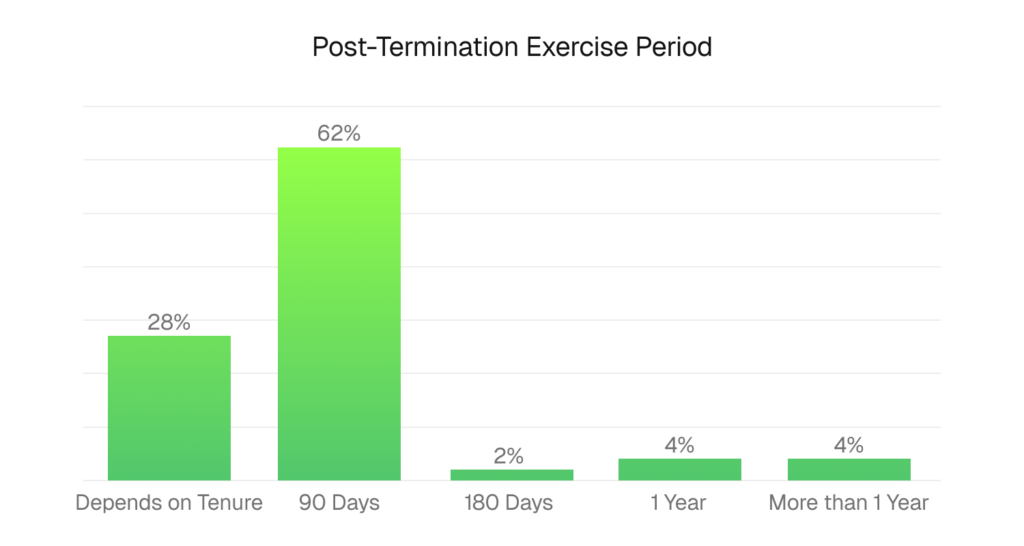
Equity is often one of the most confusing parts of the offboarding process for employees, largely because the rules change the moment employment ends. For employees with stock options, leaving a company starts a countdown. Once employment ends, vested options don’t stay open indefinitely. They must be exercised within a defined window or they expire. That timeline, known as the post‑termination exercise period, is something employees watch closely because it can materially affect what they’re able to keep.
Most companies (62%) continue to rely on a 90‑day exercise window. This is typically due to accounting implications and equity plan constraints.
Nearly a third (28%) offer a tenure‑based approach with longer windows for longer service. Only 10% extend beyond 90 days, even though employees often push for more time.

How This Shapes the Year Ahead
Severance will continue to play an important role in workforce planning throughout 2026. Policies that once felt sufficient may no longer match what employees expect or what companies need as they balance cost management with a thoughtful employee experience.
As more organizations formalize their severance structures, revisit payout methods, and evaluate equity treatment, clarity helps everyone involved. Well‑defined severance practices that give departing employees a more predictable experience and offer leaders stability during difficult transitions.
Get More Sequoia Insights and Data
Want to know more about how investor-backed companies are designing their compensation and benefits programs? Access Sequoia’s latest data and benchmarking reports.
Last Updated: